


The Body Keeps the Score: Quotes
Brain, Mind, and Body in the Healing of Trauma
Book by Bessel van der Kolk
Want to read the full summary?Click here to read for free!
Summary
The Body Keeps the Score revolutionizes our understanding of trauma's impact and offers a science-backed roadmap to healing the mind, brain and body.
Sign in to rate
Average rating: 4.75 (4 ratings)
These are the best quotes from The Body Keeps the Score by Bessel van der Kolk. If you want to read a full summary of this book for free, click here.
"Use-Dependent" Brain Development
"The brain is formed in a 'use-dependent manner.' This is another way of describing neuroplasticity, the relatively recent discovery that neurons that 'fire together, wire together.' When a circuit fires repeatedly, it can become a default setting—the response most likely to occur. If you feel safe and loved, your brain becomes specialized in exploration, play, and cooperation; if you are frightened and unwanted, it specializes in managing feelings of fear and abandonment."
Section: 1, Chapter: 2
Immobilization: The Root of Most Traumas
"Immobilization is at the root of most traumas. When fight and flight are thwarted, the human organism has a third, even more primitive, way to save itself: total paralysis, like an animal playing dead. This reaction is controlled by the most ancient reptilian part of our brain. When that reptilian brain takes over, the bodies of traumatized people re-enact the dynamics of the original trauma, collapsing, getting stuck in (often maladaptive) patterns of behavior and movement. Feeling 'scared stiff' and 'frozen in fear' (collapsing and going numb) describe precisely what terror and trauma feel like."
Section: 2, Chapter: 4
Trauma as an Imprint
"Trauma is not just an event that took place sometime in the past; it is also the imprint left by that experience on mind, brain, and body."
Section: 2, Chapter: 5
Inner Maps
"If you have a comfortable connection with your inner sensations—if you can trust them to give you accurate information—you will feel in charge of your body, your feelings, and your self."
Section: 3, Chapter: 7
Facing Yourself
“As long as you keep secrets and suppress information, you are fundamentally at war with yourself…The critical issue is allowing yourself to know what you know. That takes an enormous amount of courage.”
Section: 5, Chapter: 14
Describing Private Experiences
"The task of describing most private experiences can be likened to reaching down to a deep well to pick up small fragile crystal figures while you are wearing thick leather mittens." - Jerome Kagan
Section: 5, Chapter: 14
Some links are affiliate links. Summrize may earn a commission if you buy through them.
🔗 Goodreads🔗 AmazonRelated Content
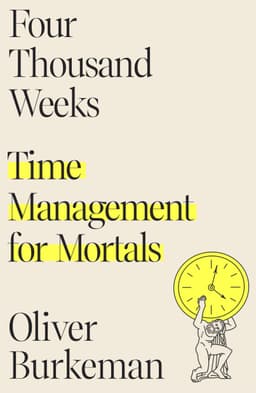
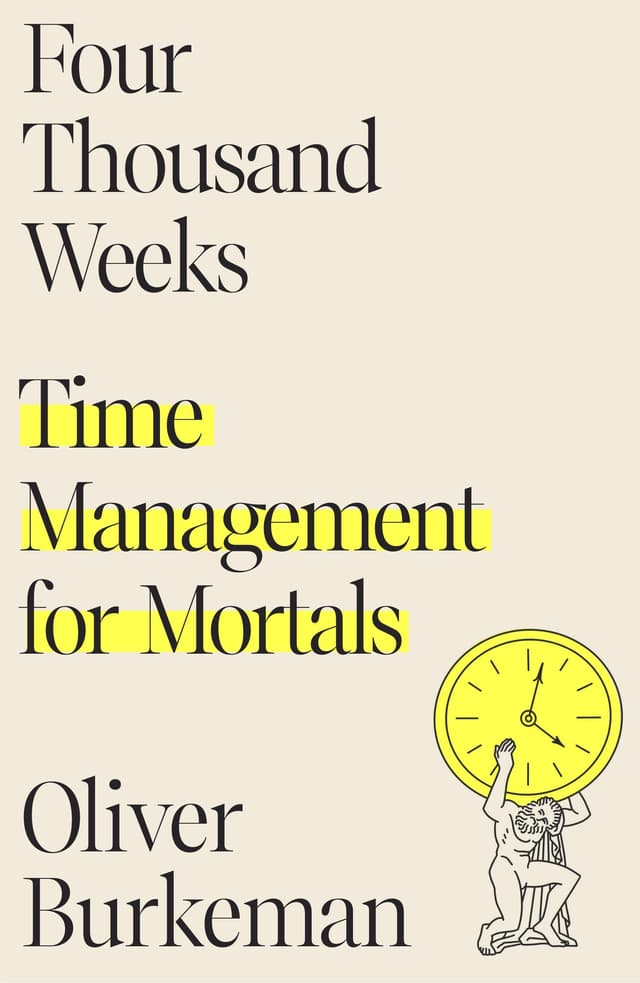
Four Thousand Weeks Book Summary
Oliver Burkeman
"Four Thousand Weeks" offers a radical perspective on time management, urging us to abandon the futile quest for control and embrace our finite existence. By accepting our limitations and making conscious choices, we can discover a more meaningful and fulfilling way to spend our brief time on this planet.
"Four Thousand Weeks" offers a radical perspective on time management, urging us to abandon the futile quest for control and embrace our finite existence. By accepting our limitations and making conscious choices, we can discover a more meaningful and fulfilling way to spend our brief time on this planet.
Philosophy
Personal Development